20 Best AI Search Tracker Tools in 2026: The Ultimate Guide
The search landscape has shifted dramatically. In 2026, AI-powered search engines and Large Language Models (LLMs) like ChatGPT, Claude, and Google Gemini have become the primary starting point for millions of users. If your brand isn't being cited in these AI-generated answers, you're missing out on a massive portion of the market.
Why AI Search Tracking is Essential
Traditional rank tracking - monitoring where you stand in the "10 blue links" of Google - is no longer sufficient. Users are increasingly asking complex questions and receiving direct answers from AI. Tracking your visibility in these environments is no longer optional; it's a core requirement for staying competitive.
As we discussed in our article on ChatGPT SEO, AI-driven search transforms your entire strategy. Without a dedicated AI search tracker, you're flying blind in an era where Content-Answer Fit and AI citations define your brand's digital authority.
The Difference: Traditional SEO vs. AI Search Tracking (GEO)
Traditional SEO focuses on keywords, backlinks, and technical health to rank on Search Engine Results Pages (SERPs). While these still matter, Generative Engine Optimization (GEO) is the new frontier. Here's how they differ:
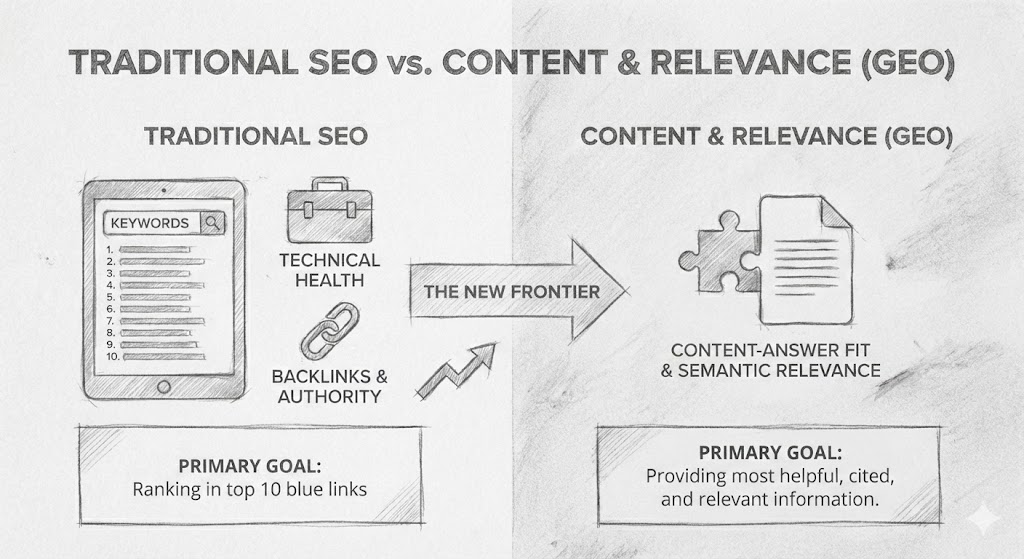
The paradigm shift from search engine optimization to generative engine optimization for AI-powered search platforms
| Feature | Traditional SEO | AI Search (GEO) |
|---|---|---|
| Primary Goal | Ranking in top 10 blue links | Being cited/recommended by AI models |
| Measurement | Keyword Position | Citation Rate & Share of Voice |
| Key Factor | Backlinks & Authority | Content-Answer Fit & Semantic Relevance |
| User Intent | Search Queries | Conversational Prompts |
Understanding these ChatGPT ranking factors is critical. AI models don't just look for keywords; they look for the most helpful, cited, and relevant information to satisfy a user's prompt.
Top AI Search Tracker Tools
Here are the best tools currently available to help you monitor and optimize your AI visibility. We've listed them based on their features, accuracy, and depth of analysis.
1. Sellm (The Leader in AI Visibility & GEO)
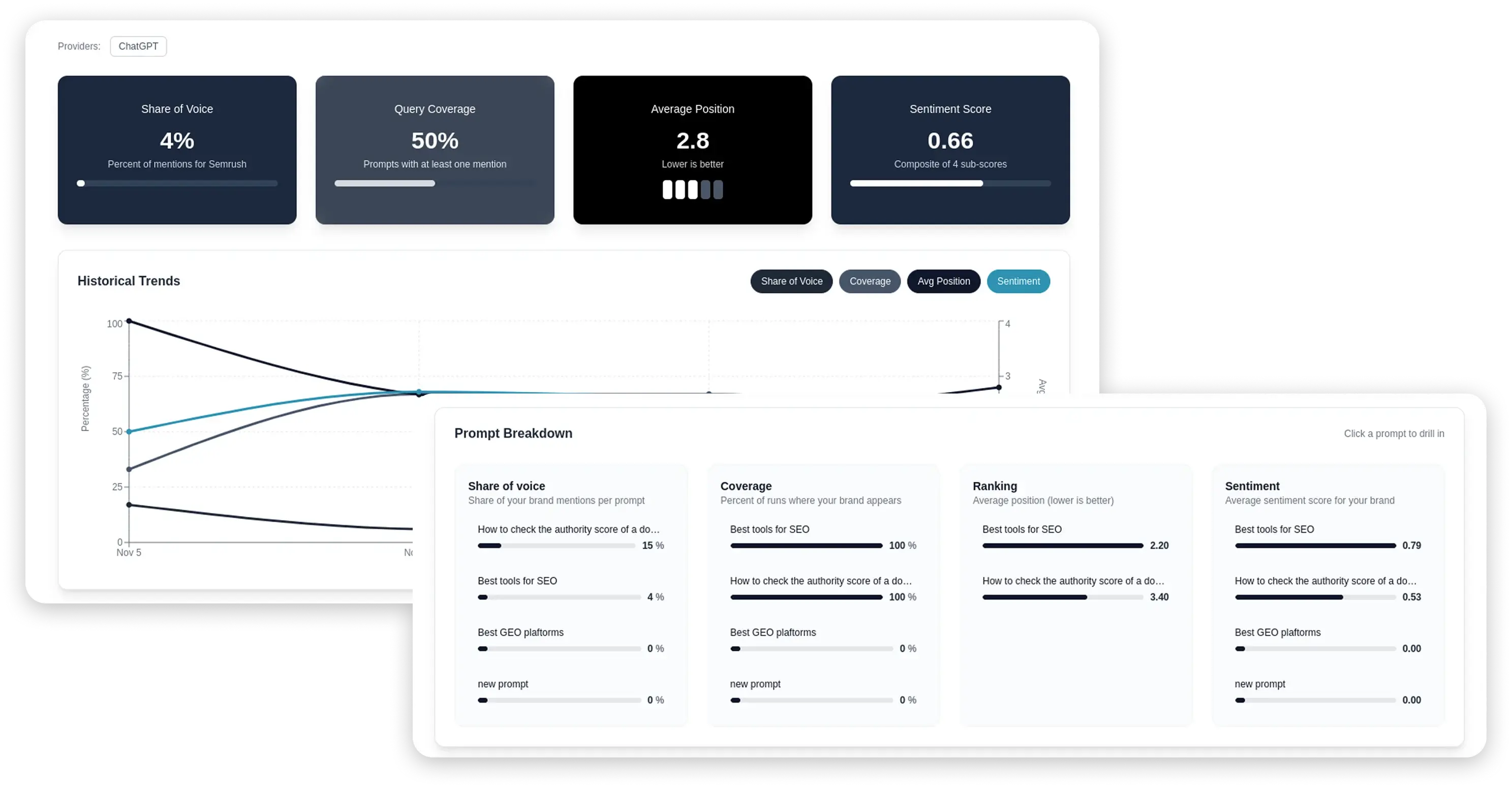
Comprehensive generative engine optimization dashboard with multi-platform AI search visibility monitoring
Sellm is the most advanced platform dedicated specifically to Generative Engine Optimization (GEO) and brand monitoring in AI environments. Unlike traditional tools that added AI features as an afterthought, Sellm was built from the ground up to handle the complexities of LLM tracking.
Pros
- Comprehensive coverage: ChatGPT, Claude, Perplexity, Gemini, and Google AI Overviews.
- Deep sentiment and Content-Answer Fit analysis.
- Real-time alerts for brand mentions.
- Actionable optimization checklists.
Cons
- Focuses specifically on AI search (requires other tools for traditional SEO).
Pricing: Free tier available; Pro plans start at $49/mo; Enterprise custom pricing.
2. AI SEO Tracker
A specialized tool that provides real-time visibility reports across major AI models. It's excellent for businesses just starting their journey into AI search optimization and wanting a clear overview of brand mentions.
Pros
- Prompt-level rankings.
- Simple, intuitive interface.
- Good competitor comparison.
Cons
- Less historical data than established platforms.
- Limited technical SEO features.
Pricing: Free reports; paid plans start at ~$79/mo.
3. Surfer's AI Tracker
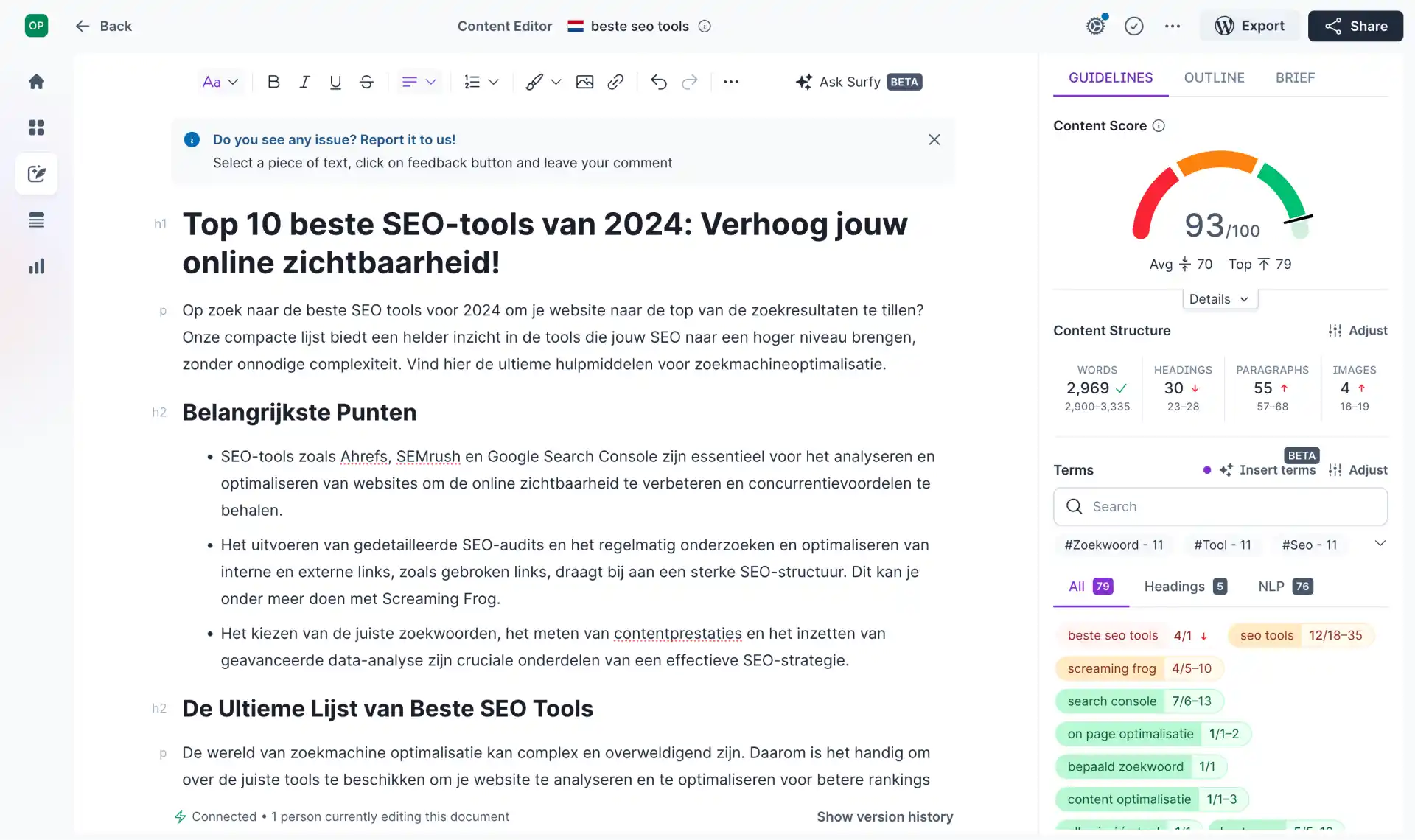
Content editor showing AI-ready optimization guidelines with real-time GEO recommendations
Building on their strength in content optimization, Surfer's AI Tracker ties prompt inputs directly to AI visibility. It's a great tool for content teams who want to integrate AI tracking into their existing workflow.
Pros
- Deep integration with Surfer's content editor.
- Excellent content gap detection.
- Strong semantic analysis.
Cons
- Can be expensive as part of the full Surfer suite.
- Learning curve for the full feature set.
Pricing: Part of Surfer's subscription; typically starts around $89/mo.
4. SEOmonitor's AI Search Tracking
Known for its deep integration with keyword campaigns, SEOmonitor has expanded into tracking LLM outputs. It provides sentiment and citation ranking within a familiar environment for SEO professionals.
Pros
- Familiar workflow for agency teams.
- Strong reporting capabilities.
- Integrates AI metrics with traditional rank tracking.
Cons
- Pricing scales fast with keyword volume.
- AI features are secondary to traditional SEO.
Pricing: Scalable based on keyword count; starts ~$100/mo.
5. SE Ranking's AI Visibility Tracker
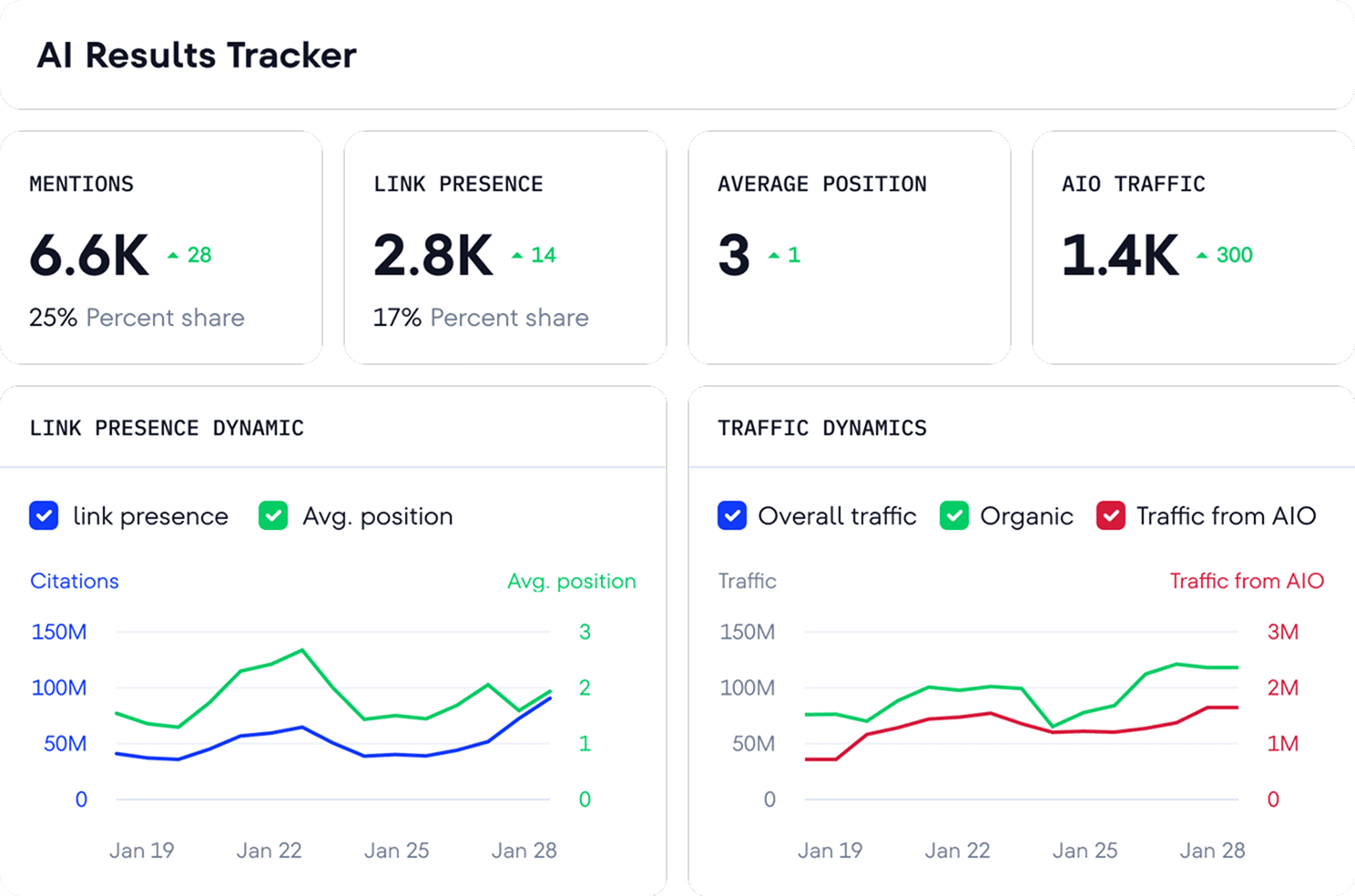
Multi-engine brand monitoring platform combining traditional SERP tracking with LLM citation analysis
SE Ranking offers a comprehensive toolkit for monitoring brand visibility across multiple AI engines. It's an excellent choice for agencies and in-house teams who want a combined view of all metrics in one dashboard.
Pros
- Robust, multi-engine coverage.
- Good value for the price.
- Comprehensive historical data.
Cons
- Some advanced AI features require separate add-ons.
- Interface can feel cluttered.
Pricing: Starts ~$55/mo with optional AI toolkit add-ons.
6. Profound (Enterprise AI Monitoring)
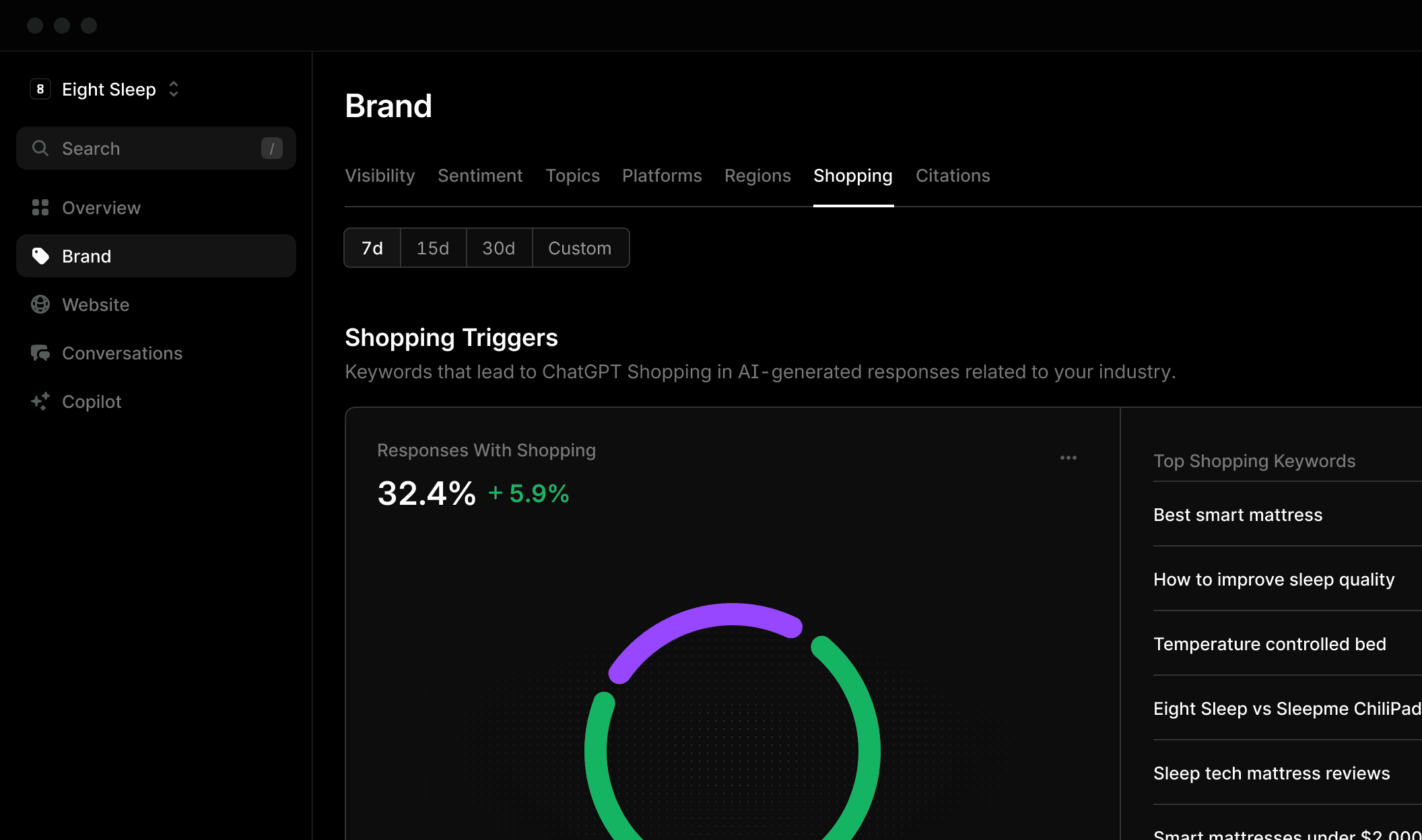
Enterprise AI monitoring solution with agent-level insights and comprehensive ranking breakdown analysis
Profound is built for large-scale brands and enterprises that need comprehensive monitoring across the entire AI ecosystem, including specialized agents and crawlers.
Pros
- Enterprise-grade analytics.
- Monitors AI crawlers and bots.
- Agent-level insights.
Cons
- Very high cost.
- Requires significant time to master.
Pricing: Starts at $399/mo; Enterprise custom pricing available.
7. Vaylis AI
Vaylis AI focuses on providing a holistic view of AI search visibility, helping brands understand how they are perceived across the entire generative landscape.
Pros
- Excellent visualization of visibility trends.
- Supports a wide range of LLMs.
- User-friendly dashboard for marketing teams.
Cons
- Advanced features require higher-tier plans.
- Relatively newer entrant in the market.
Pricing: Plans typically start around $149/mo.
8. AthenaHQ
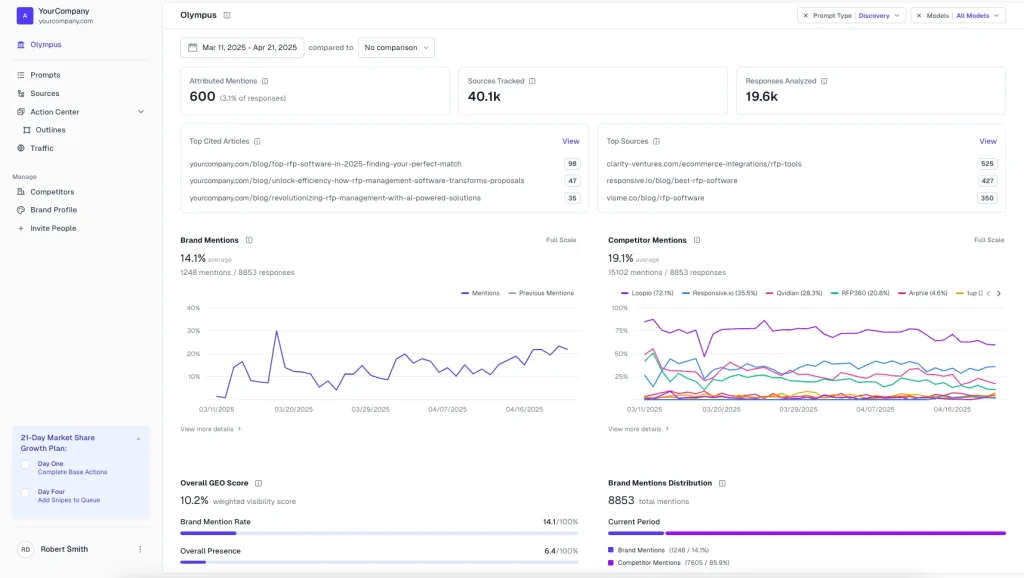
Mid-market GEO platform with robust tracking tools and comprehensive agency-level client management features
AthenaHQ is designed for agencies and mid-market companies that need robust tracking and optimization tools for AI-driven search.
Pros
- Strong agency-focused features.
- Detailed optimization recommendations.
- Multi-client management capabilities.
Cons
- Can be complex for solo users.
- Higher starting price point.
Pricing: Custom pricing; starting around $250/mo.
9. Otterly AI
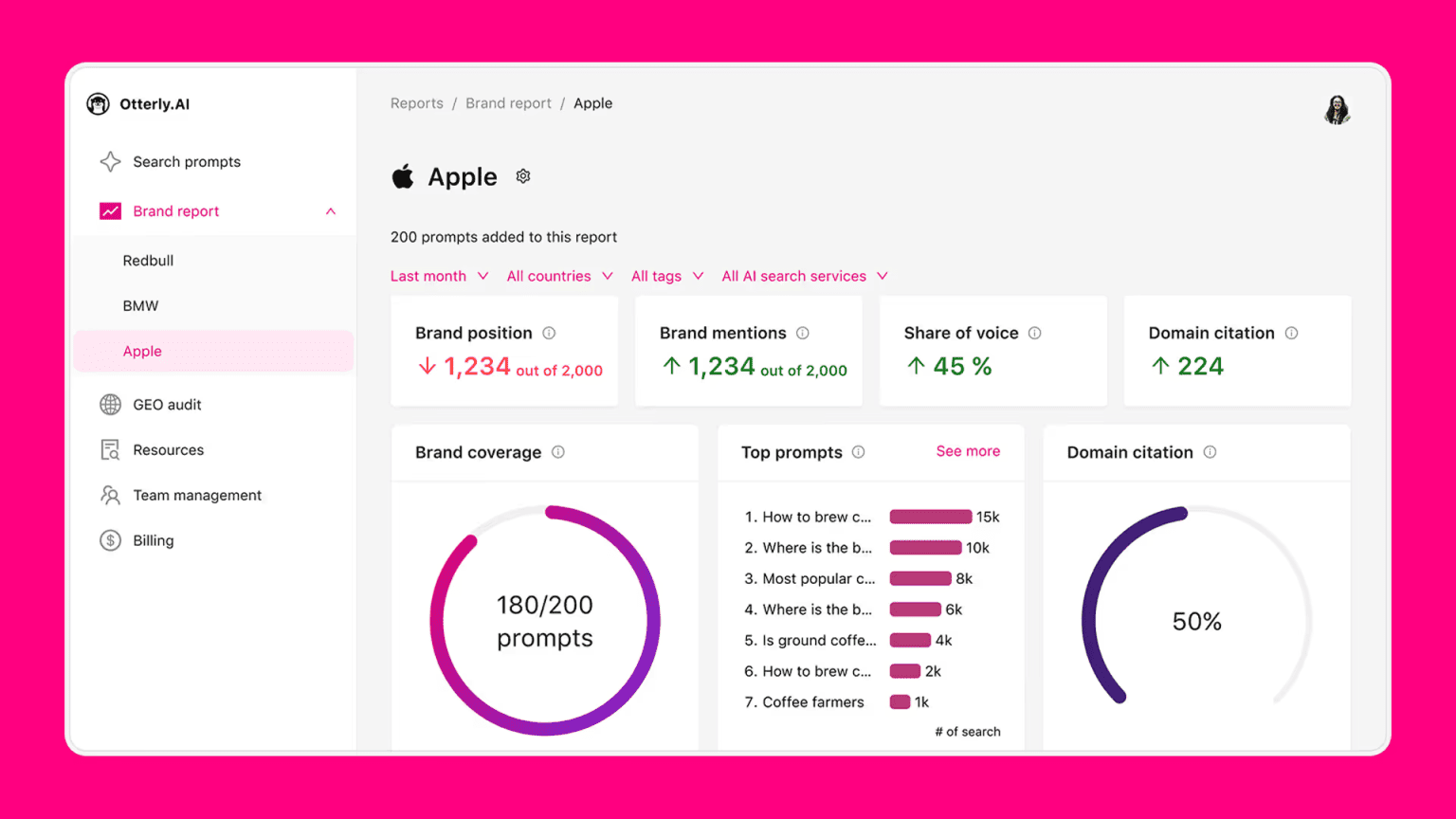
European data-compliant AI visibility tracker featuring real-time alert system for brand mentions
Based in Austria, Otterly AI is a rising star in the GEO space, offering specialized tools for monitoring brand representation in AI search results.
Pros
- Deep analysis of brand sentiment in AI responses.
- Real-time monitoring and alerts.
- Focus on European data privacy standards.
Cons
- Focused heavily on visibility (less on technical SEO).
- Support for niche LLMs is still growing.
Pricing: Starts at $99/mo.
10. HubSpot AEO
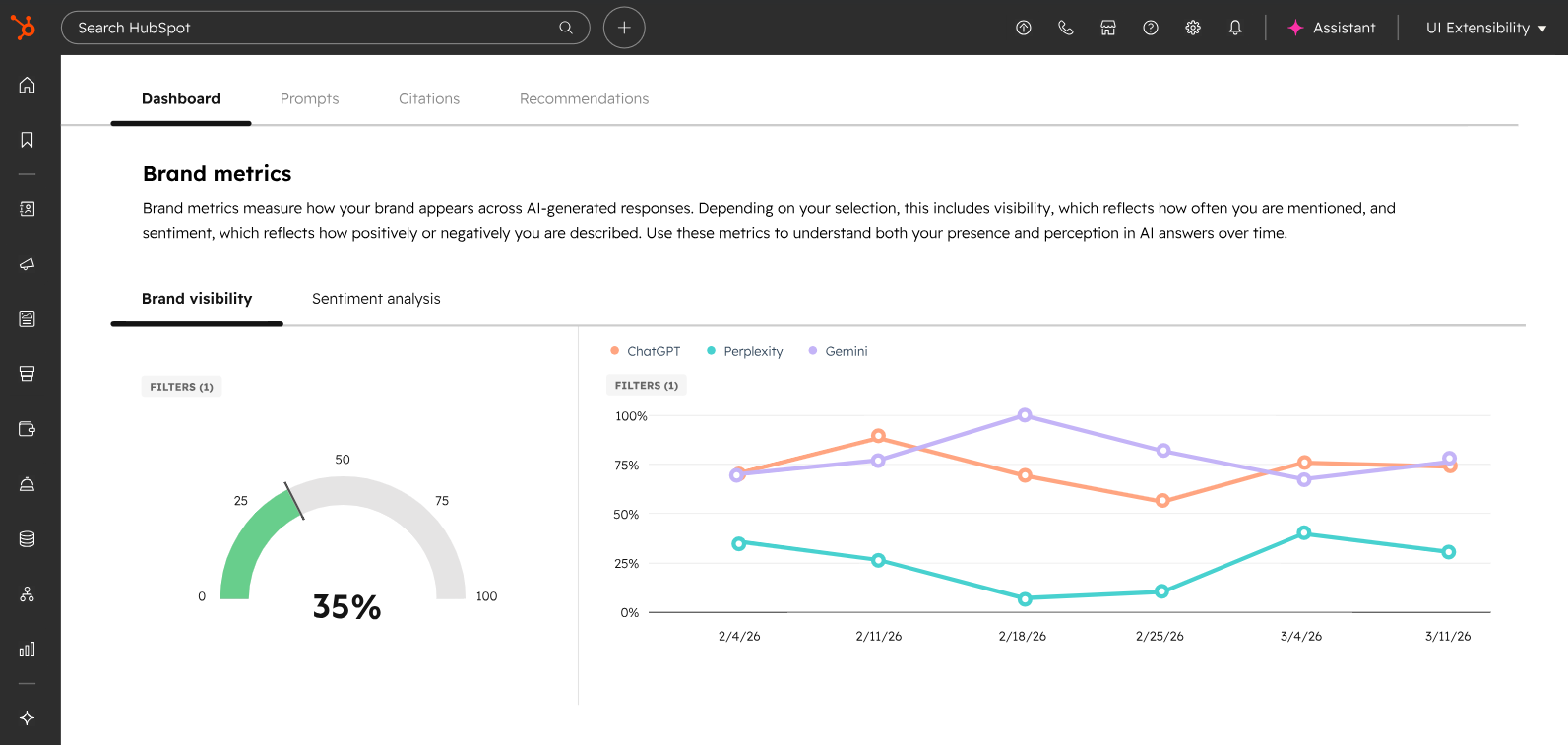
Multi-engine brand monitoring dashboard with brand visibility scores
HubSpot AEO handles brand visibility, sentiment, prompt and citation tracking across ChatGPT, Gemini and Perplexity. HubSpot AEO is an excellent option for businesses that are already in the HubSpot ecosystem since the platform can be used within HubSpot Marketing Hub. HubSpot AEO also works well as a standalone solution.
Pros
- Personalized AI optimization recommendations.
- In-depth sentiment analysis.
- Integrates with HubSpot Marketing Hub and CRM.
Cons
- Doesn't cover as many AI search engines.
- Marketing Hub integration available at a rather steep price tag.
Pricing: Standalone AEO tool starts at $50/month. Marketing Hub bundle available in the Professional plan, at $800/month.
11. Writesonic GEO
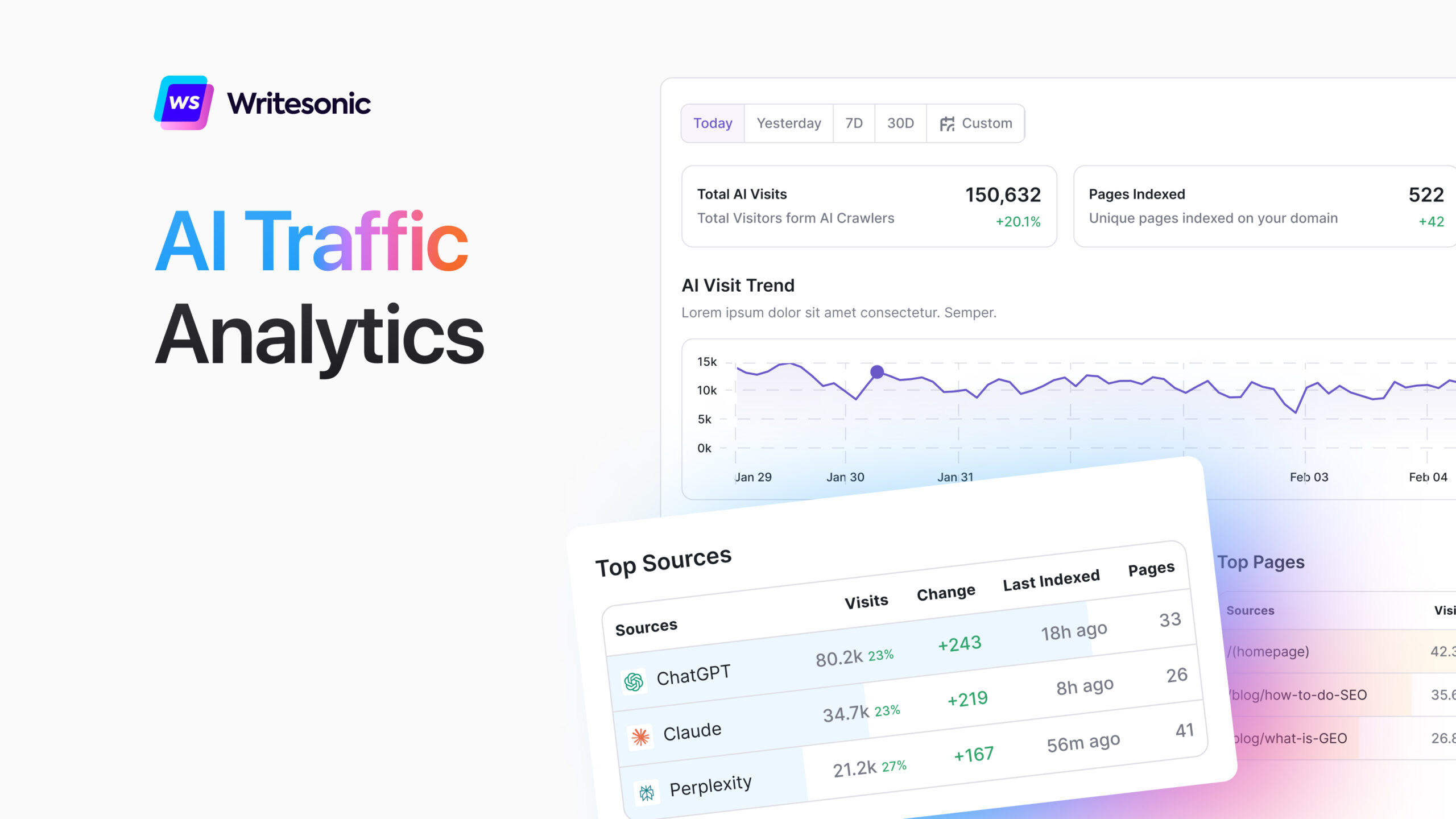
Content creation platform with integrated AI visibility tracking and real-time optimization suggestions
Building on their AI writing prowess, Writesonic's GEO tool helps creators optimize their content for better AI search visibility from the start.
Pros
- Seamless integration with content creation tools.
- Real-time optimization suggestions while writing.
- Cost-effective for existing Writesonic users.
Cons
- Tracking features are less detailed than dedicated trackers.
- Primarily content-focused.
Pricing: Included in premium Writesonic plans; starts ~$20/mo.
12. RankScale AI
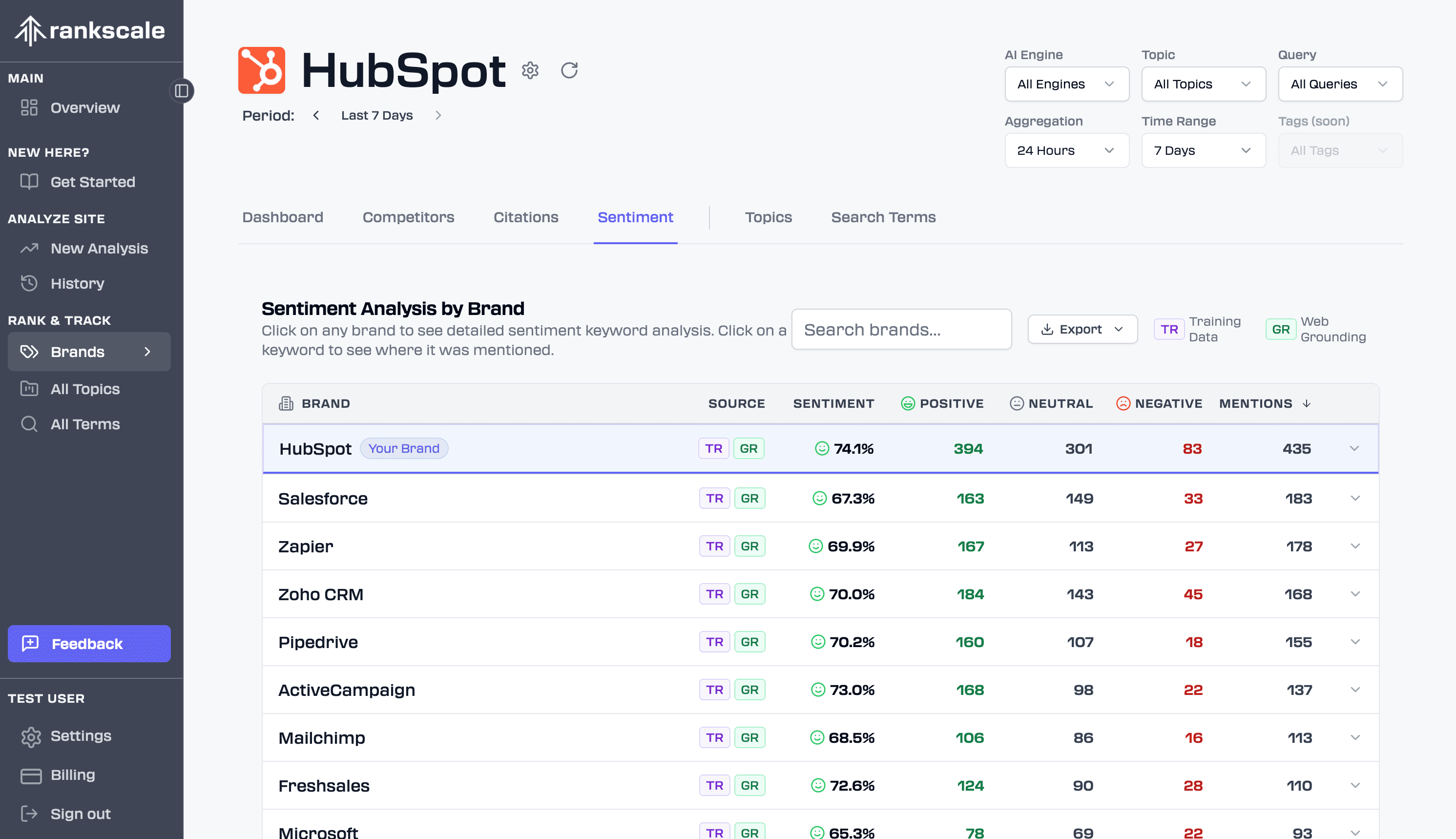
Budget-friendly LLM performance tracker with positive, neutral, and negative sentiment breakdowns
RankScale AI offers an affordable entry point for businesses looking to track their performance across the most popular LLMs.
Pros
- Very affordable for small businesses.
- Covers major platforms like ChatGPT and Gemini.
- Simple setup process.
Cons
- Limited depth in sentiment analysis.
- Lower frequency of updates on basic plans.
Pricing: Starts at $29/mo.
13. ZipTie
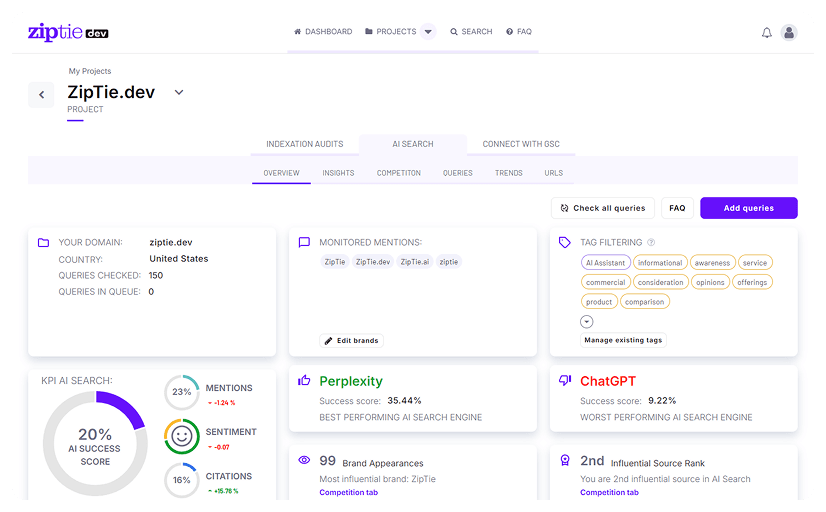
Technical SEO dashboard featuring custom integration capabilities and precision tracking analytics
ZipTie is a developer-friendly tool that provides granular data on AI search visibility through a robust API and technical dashboard.
Pros
- Powerful API for custom integrations.
- Highly granular visibility data.
- Excellent for technical SEO teams.
Cons
- Requires technical knowledge to use effectively.
- Less focus on "ready-made" reports.
Pricing: Custom API pricing; starts around $200/mo.
14. Kime
Kime offers a specialized approach for e-commerce brands, tracking how products are recommended by AI shopping assistants.
Pros
- Specialized for e-commerce and product searches.
- Tracks product-level citations and links.
- Helpful insights for marketplace sellers.
Cons
- Narrow focus on shopping/e-commerce.
- Limited utility for service-based businesses.
Pricing: Starts at $149/mo.
15. LLMrefs
LLMrefs is an ideal choice for SMBs, providing straightforward tracking of where your content is referenced as a source by major LLMs.
Pros
- Focused on source attribution and links.
- Clean, easy-to-understand interface.
- Great value for small marketing teams.
Cons
- Lacks advanced competitive analysis tools.
- Fewer integration options.
Pricing: Starts at $49/mo.
16. Scrunch AI
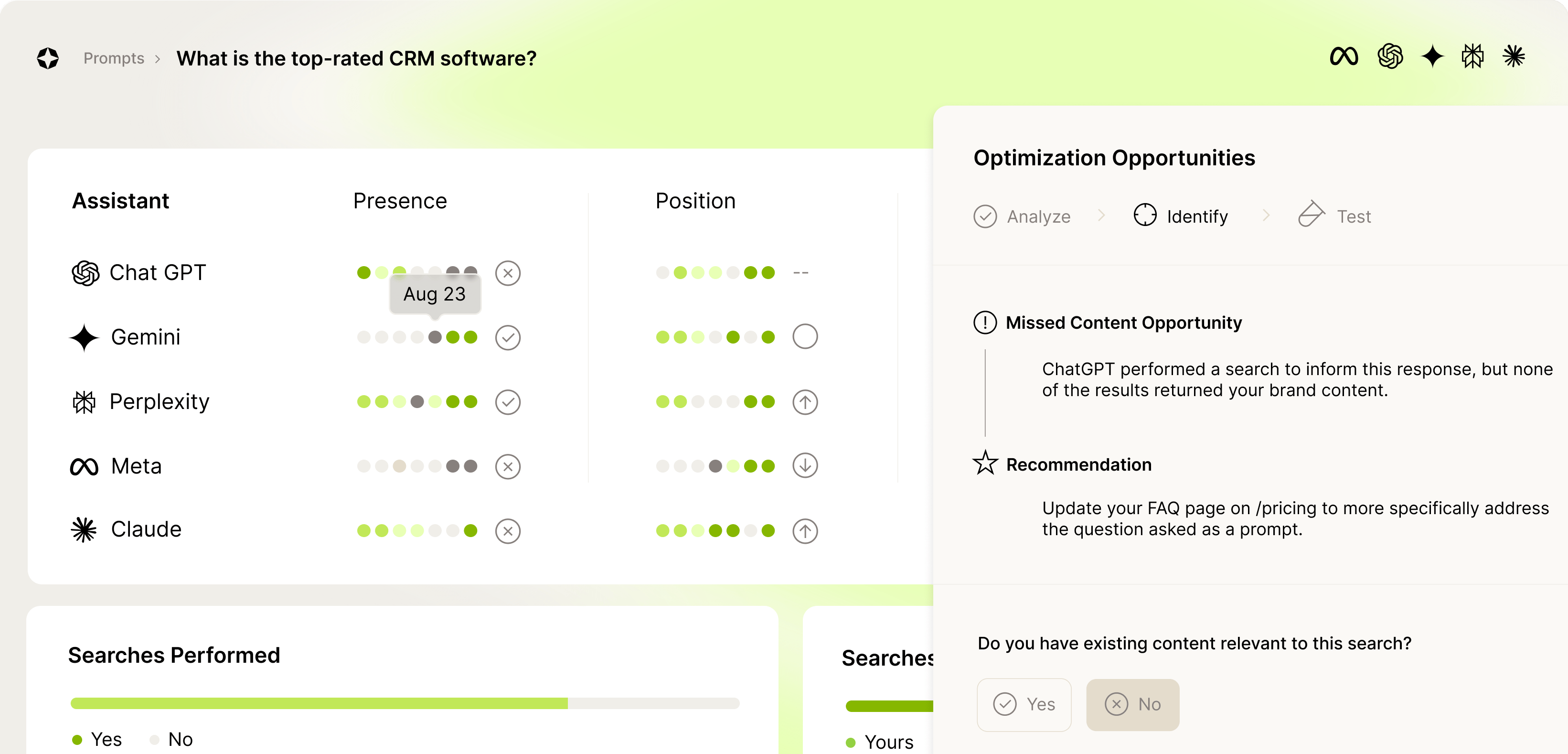
Multi-channel marketing analytics tool tracking digital authority across AI platforms and social media
Scrunch AI is an enterprise solution that combines influencer marketing data with AI search tracking to understand overall digital authority.
Pros
- Combines visibility tracking with authority metrics.
- Large database of brand mentions.
- Excellent for multi-channel marketing teams.
Cons
- Complex feature set requires a learning curve.
- High price point for smaller businesses.
Pricing: Custom enterprise plans; typically $1,000+/mo.
17. Nightwatch LLM Tracking
Nightwatch has expanded its popular rank tracking tool to include LLM visibility, making it a familiar choice for existing users.
Pros
- Integrates AI tracking into a familiar SERP tracker.
- Strong local and regional tracking capabilities.
- Reliable data and long historical uptime.
Cons
- AI features are still being fully integrated.
- Less focused on sentiment than GEO-specific tools.
Pricing: Add-on to Nightwatch plans; starts around $39/mo.
18. Keyword.com AI Tracker
Keyword.com provides a streamlined AI tracker that focuses on keyword-level performance within AI summaries.
Pros
- Precise keyword-to-AI response mapping.
- Very intuitive reporting for clients.
- Reliable daily updates.
Cons
- Limited depth in non-keyword metrics.
- Focused primarily on rank tracking.
Pricing: Starts at $24/mo.
19. Geneo AI
Geneo AI is a simplified tracking solution for those who want a "set it and forget it" way to monitor brand mentions in AI search.
Pros
- Extremely simple to use.
- Fast setup and automated reports.
- Affordable pricing.
Cons
- Lack of advanced optimization guidance.
- Covers fewer LLMs than competitors.
Pricing: Starts at $19/mo.
20. Ahrefs' Brand Radar
Ahrefs has introduced Brand Radar to help users track their digital footprint across AI and social platforms, leveraging their massive data index.
Pros
- Leverages the world's most powerful backlink and content index.
- Comprehensive view of brand authority.
- Seamless for existing Ahrefs users.
Cons
- Can be very expensive as part of higher Ahrefs tiers.
- AI tracking is just one part of a very large toolset.
Pricing: Part of Enterprise Ahrefs plans; contact for pricing.
Strategic Insights: Scaling Your AI Presence
Merely tracking your visibility isn't enough. You need to use these insights to scale your operations. As we explored in Outrank AI Blog Automation, combining AI tracking with automated content workflows can significantly boost your reach.
By identifying content gaps through tools like Sellm, you can proactively create the high-quality, authoritative content that AI models prefer. This proactive approach is what separates leaders from followers in the AI search era.
Conclusion: The Future is Generative
The tools you choose today will define your brand's authority for years to come. While traditional SEO tools are evolving, specialized platforms like Sellm offer the depth required to truly master AI search tracking.
Ready to see how your brand performs in the AI search landscape? Visit Sellm.io today and start your journey towards total AI visibility.