How to Run a GEO Audit: Step-by-Step Guide (2026)
A GEO audit is a systematic analysis of your brand's visibility inside AI-generated answers from ChatGPT, Perplexity, Claude, and Google AI Overviews. Unlike traditional SEO audits that focus on ranking in blue links, a GEO audit measures how often AI models mention your brand and cite your content when users ask questions related to your business. If your brand isn't appearing in these AI answers, you're invisible to millions of potential customers who now rely on generative search for buying decisions.
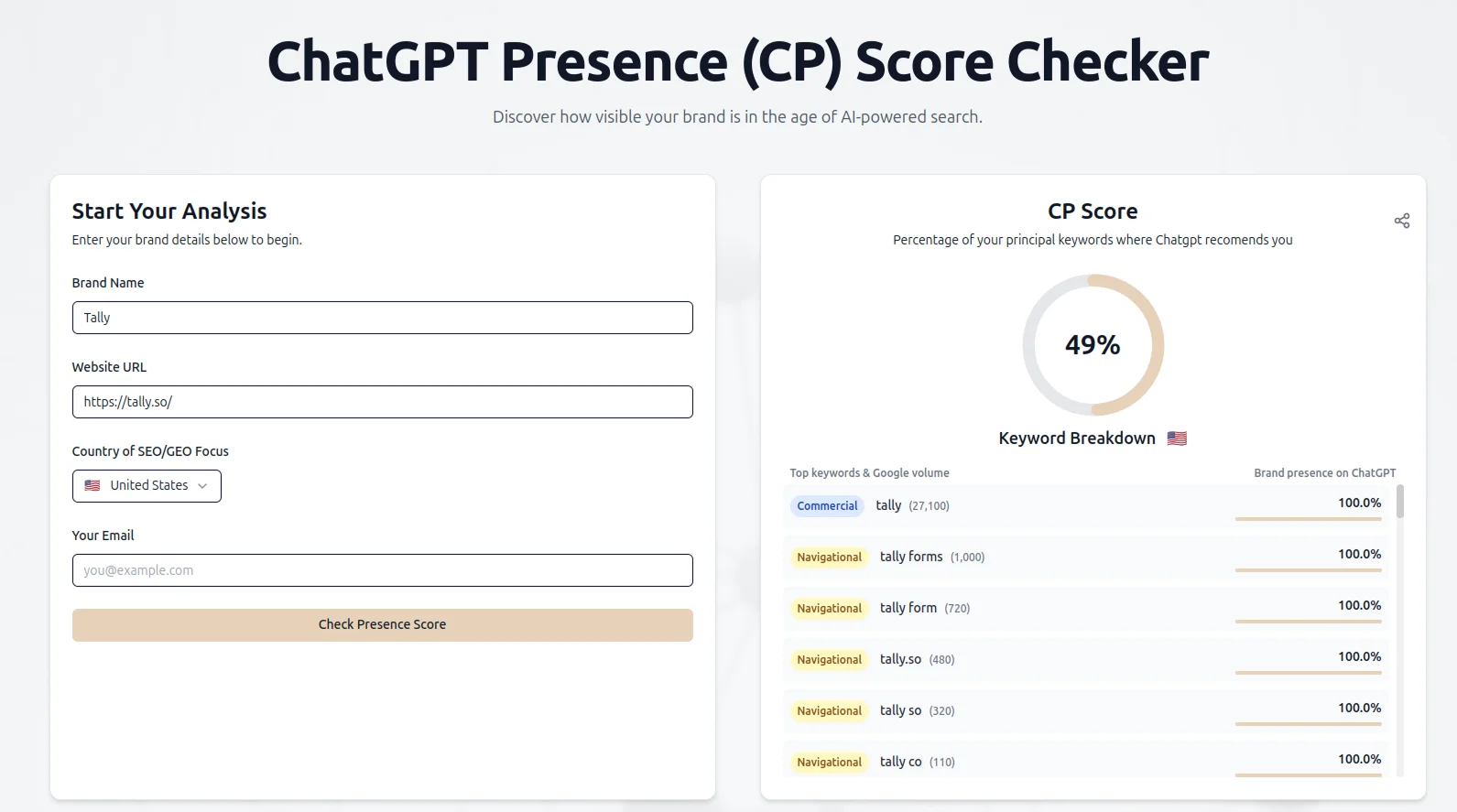
What Is a GEO Audit?
A GEO audit (Generative Engine Optimization audit) evaluates your brand's presence across large language models (LLMs) and AI search engines. While SEO audits analyze your Google rankings, a GEO audit answers a different question: Is your brand being recommended by AI assistants?
When users ask ChatGPT "What's the best project management tool?" or Perplexity "Which CRM should I use?", the AI generates a curated answer that only mentions 3-8 brands. A GEO audit reveals whether you're in that elite group or completely invisible.
The core components of a GEO audit include:
- Brand Mention Analysis: How often AI models explicitly name your brand in their answers
- Citation Tracking: Which of your URLs are being used as sources by AI models
- Competitive Benchmarking: How your visibility compares to direct competitors
- Cross-LLM Comparison: Performance differences across ChatGPT, Claude, Perplexity, and Gemini
- Keyword Gap Analysis: Which queries trigger competitors but not your brand
Why Your Brand Needs a GEO Audit Now
The digital landscape has fundamentally shifted. Traditional search behaviors are evolving rapidly, and if your strategy hasn't adapted, you're already falling behind. Here's why a GEO audit is crucial:
- Winner-takes-all visibility: Unlike Google where position #7 still gets clicks, AI answers only feature 3-8 brands. You're either in the answer or invisible.
- Trust signal amplification: Being cited by ChatGPT or Perplexity builds instant credibility that traditional ads cannot match.
- Shifting user behavior: Millions of users now ask AI assistants for recommendations before visiting Google.
- Early mover advantage: Brands optimizing for GEO now will build authority that's difficult to displace later.
A critical finding from our platform data: only 30% of a brand's top SEO keywords are also relevant in generative search. The keywords driving your Google traffic today are likely not the ones that will get you cited by ChatGPT tomorrow. A GEO audit reveals this gap.
Essential GEO KPIs: What Metrics to Track
A comprehensive GEO audit moves beyond traditional SEO metrics. While traffic and rankings still matter, the most critical GEO KPIs for measuring success in generative search are fundamentally different:
1. Brand Mention Rate
This is your primary GEO KPI. Brand mention rate measures how often your brand name explicitly appears in AI-generated answers across all tested queries. Track this as a percentage: if you test 100 relevant queries and your brand appears in 25 answers, your brand mention rate is 25%.
2. Average Brand Position
When AI models list multiple brands, position matters enormously. Being mentioned first carries significantly more weight than being mentioned fifth. Track your average position across all queries where you appear.
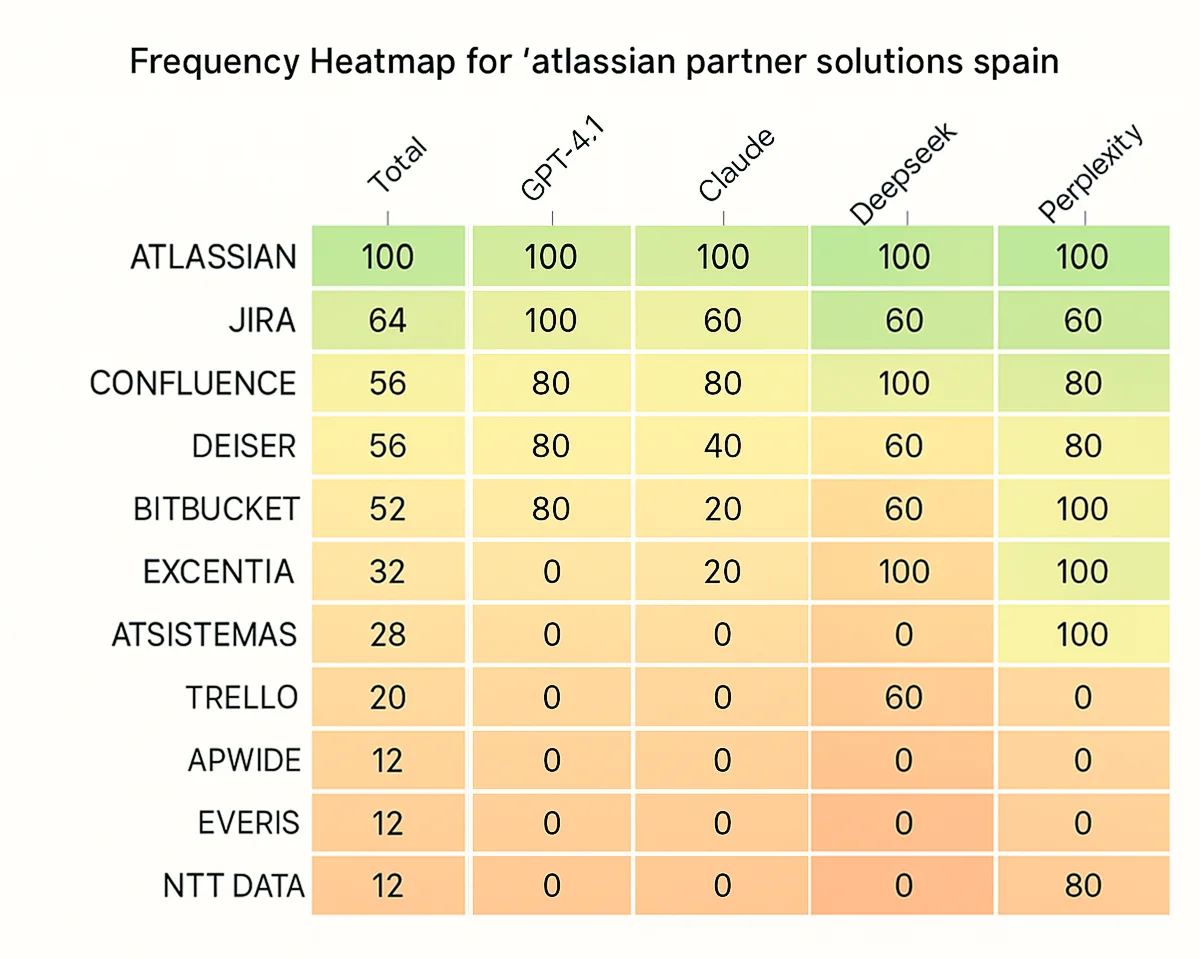
3. Citation Count & Citation Heatmap
Citations track which of your URLs are being used as sources for AI answers. A citation heatmap visualizes which domains and specific pages are cited for your target keywords, revealing your content's direct influence on AI outputs.
4. Cross-LLM Visibility Score
Your visibility can differ dramatically between ChatGPT, Claude, Perplexity, and Google AI Overviews. This GEO KPI tracks your performance across each platform, identifying which models favor your brand and which ignore it.
5. Competitive Share of Voice
How do you stack up against rivals in AI-generated results? This metric reveals who is winning the citation battle for your most important keywords and where you have opportunities to gain ground.
6. Keyword Coverage Rate
Of all the queries relevant to your business, what percentage triggers your brand in AI answers? This GEO KPI identifies blind spots in your generative search presence.
GEO Audit Step by Step: The Complete Process
Conducting a thorough GEO audit requires a systematic approach. Here's how to audit your generative engine optimization step by step:
Step 1: Define Your Keyword Universe
Start by gathering your target keywords. Unlike SEO keyword research, GEO keyword selection should focus on:
- Questions users ask AI assistants about your industry
- Comparison queries ("X vs Y", "best tools for...")
- Recommendation requests ("what should I use for...")
- Your core product/service categories
Aim for 50-200 keywords that represent high-intent queries where AI recommendations influence purchasing decisions.
Step 2: Run Multi-LLM Brand Presence Analysis
Using a GEO audit tool like Sellm, run each keyword across multiple AI models: ChatGPT (GPT-4), Claude, Perplexity, Gemini, and search-enabled variants. For each query, capture:
- Whether your brand is mentioned
- Your position in the brand list
- The exact context of the mention
- Which competitors appear alongside you
Step 3: Conduct Citation Audit
For search-enabled AI models (Perplexity, ChatGPT with browsing, Gemini), extract all cited URLs. Map these to identify:
- Which of your pages are being cited
- Which competitor pages are being cited
- Citation patterns across different query types
Step 4: Analyze Geographic Variations
AI models can return different results based on user location. Run your GEO audit across your key markets to understand regional visibility differences. As demonstrated in our Deiser GEO audit case study, brands often have drastically different visibility in different countries.
Step 5: Benchmark Against Competitors
For each keyword, document not just your presence but your competitors' presence. Calculate share of voice metrics and identify:
- Keywords where competitors dominate
- Keywords where you have exclusive visibility
- Opportunities where neither you nor competitors appear
Step 6: Generate Actionable Insights
Transform your GEO audit data into a strategic roadmap:
- Quick wins: Keywords where you appear but rank low. Optimize content for these first
- Gap opportunities: Keywords where competitors appear but you do not. Create targeted content
- Authority builders: Topics where you can establish definitive expertise
- Abandon list: Tangential topics that LLMs will never associate with your brand
Best GEO Audit Tools
Conducting a GEO audit manually is time-consuming and error-prone. Here are the leading GEO audit tools available:
Sellm (Recommended)
Sellm is a purpose-built GEO audit tool that automates the entire process. Key features include:
- Multi-LLM testing across ChatGPT, Claude, Perplexity, Gemini, and more
- Automated brand mention and citation tracking
- Citation heatmaps for visual analysis
- Competitive benchmarking dashboards
- Historical tracking to measure progress over time
Manual Auditing
For smaller-scale audits, you can manually query AI models and document results in a spreadsheet. This approach works for initial exploration but becomes impractical at scale. Key limitations include:
- Time-intensive for large keyword sets
- Difficult to track changes over time
- No automated competitive analysis
- Prone to inconsistency and human error
GEO Audit vs. SEO Audit: Key Differences
Understanding the distinction between a GEO audit and a traditional SEO audit is critical for modern digital strategy:
| Aspect | SEO Audit | GEO Audit |
|---|---|---|
| Goal | Rank on a page of links | Become part of the AI answer |
| Visibility Model | Distributed (all 10 positions get traffic) | Winner-takes-all (only 3-8 brands visible) |
| Primary KPIs | Rankings, traffic, CTR | Brand mentions, citations, position in answer |
| Content Strategy | Target high-volume keywords | Target authoritative, core-expertise topics |
| Competitive Landscape | Many competitors share visibility | Only top authorities get mentioned |
The most significant difference: LLMs reward content that is unambiguously authoritative. Broad, "traffic-grab" topics are largely ignored in favor of content tightly aligned with your core expertise. In GEO, relevance and authority trump volume.
Common GEO Audit Findings
Based on hundreds of GEO audits conducted through our platform, here are the most common patterns we discover:
Finding 1: Core Topics Dominate, Tangential Topics Fail
Brands appear in AI answers only when the query is tightly aligned with their core business offering. Content about peripheral topics, even if it drives SEO traffic, simply does not surface in LLM results.
Finding 2: Search-Enabled vs. Static Models Differ Dramatically
Search-capable models (Perplexity, ChatGPT with browsing) pull fresh results daily, while static models (base GPT-4, Claude) rely on training data. Your GEO audit results will vary significantly between these model types.
Finding 3: No "Page 2" in AI Answers
Unlike Google where position #15 still has value, AI answers have a hard cutoff. If you're not in the top 8 brands mentioned, you have zero visibility. This winner-takes-all dynamic makes GEO optimization critical.
Finding 4: Geographic Visibility Varies
Brands often have strong AI visibility in some markets and none in others. A GEO audit reveals these geographic blind spots so you can address them strategically.
How to Improve Your GEO Audit Results
Once you've completed your GEO audit, here's how to improve your generative search visibility:
- Double down on core expertise: Create definitive, comprehensive content on topics where you have genuine authority
- Structure content for AI consumption: Use clear headings, direct answers, and structured data that AI models can easily parse
- Build authoritative citations: Get mentioned and linked from sources that AI models already trust
- Abandon tangential content: Stop investing in "traffic-grab" topics that LLMs will never associate with your brand
- Monitor continuously: Run regular GEO audits to track progress and catch visibility changes
The Future of GEO Audits
The importance of GEO auditing is set to explode. Industry analysts predict that by 2028, the query volume on AI-powered answer platforms could match that of traditional search engines. Performing GEO audits and optimizing your presence now is not just about gaining a competitive edge, it is about securing your brand's future relevance.
Early investments in GEO optimization will build a moat of authority that competitors will find difficult to overcome. Brands that establish themselves as AI-trusted sources today will maintain that position as generative search becomes the dominant discovery channel.
GEO Audit Checklist
Use this checklist to ensure your GEO audit covers all critical areas:
- Keyword universe defined: 50-200 relevant queries identified that AI users ask about your industry
- Multi-LLM analysis completed: All keywords tested across ChatGPT, Claude, Perplexity, Gemini, Grok, and Copilot
- Brand mentions documented: For each query, recorded whether and where your brand appears
- Citations mapped: All cited URLs identified and visualized in a heatmap
- Competitors analyzed: Share of voice and position comparison calculated across all keywords
- Geographic variations checked: Performance compared across your target markets
- Content gaps identified: Keywords found where competitors appear but you don't
- Quick wins prioritized: Keywords identified where small optimizations could have outsized impact
- Action plan created: Concrete steps with timeline and ownership defined
- Monitoring set up: Regular tracking of key GEO KPIs configured
How Much Does a GEO Audit Cost?
GEO audit costs vary widely depending on the approach:
- Agency-led GEO audits: Typically $2,000-$10,000+ for a one-time comprehensive audit. Agencies like Wellows, Entlify, and specialized GEO consultancies charge premium rates but include strategic recommendations and sometimes implementation support.
- Self-service platforms: Tools like Sellm start at $89/month and provide continuous automated auditing across 7 AI platforms. This approach gives you real-time data at a fraction of the agency cost.
- Manual auditing: Free but extremely time-intensive. Suitable only for initial exploration with a handful of keywords. Not practical for ongoing monitoring or competitive analysis at scale.
The most cost-effective approach for most brands is to use a self-service platform for continuous monitoring and bring in agency support only for strategic questions that require specialized expertise.
Try a Free GEO Audit
Want to see how your brand performs in AI search before committing to a paid solution? Sellm offers a free tier that lets you run your first GEO audit with up to 5 prompts across all major AI platforms. Start your free GEO audit here and see your brand's AI visibility in minutes.
For a real-world example of what a GEO audit looks like in practice, explore our interactive Storm Brain demo report, where we analyzed 6,000 queries across 6 AI platforms for a San Diego digital agency.
Frequently Asked Questions
What is a GEO audit?
A GEO audit (Generative Engine Optimization audit) is a systematic analysis of your brand's visibility inside AI-generated answers from platforms like ChatGPT, Claude, Perplexity, and Google AI Overviews. It measures how often AI models mention your brand, cite your content, and where you rank compared to competitors in AI-generated recommendations.
How do I perform a GEO audit step by step?
To perform a GEO audit: (1) Define your target keywords, (2) Run queries across multiple AI models, (3) Track brand mentions and citations, (4) Analyze geographic variations, (5) Benchmark against competitors, (6) Generate actionable insights. Using a dedicated GEO audit tool like Sellm automates this process and provides comprehensive reporting.
What are the most important GEO KPIs?
The essential GEO KPIs are: brand mention rate, average brand position, citation count, cross-LLM visibility score, competitive share of voice, and keyword coverage rate. Unlike SEO metrics focused on rankings and traffic, GEO KPIs measure your presence and authority within AI-generated answers.
How is a GEO audit different from an SEO audit?
An SEO audit focuses on ranking in Google's blue links, where all 10 positions on page one get some traffic. A GEO audit focuses on appearing in AI answers, where only 3-8 brands are mentioned and everyone else is invisible. GEO audits track brand mentions and citations rather than rankings and click-through rates.
What GEO audit tools are available?
Sellm is the leading GEO audit tool, offering automated multi-LLM testing, brand mention tracking, citation heatmaps, and competitive benchmarking. For smaller audits, manual querying of AI models can work but becomes impractical at scale and lacks historical tracking capabilities.
How often should I run a GEO audit?
We recommend running a comprehensive GEO audit quarterly, with monthly monitoring of your core keywords. AI model behaviors and training data change frequently, so regular auditing ensures you catch visibility changes and can respond quickly to competitive threats.
How much does a GEO audit cost?
GEO audit costs range from free (manual querying) to $89+/month (self-service platforms like Sellm) to $2,000-$10,000+ (agency-led audits). Self-service platforms offer the best value for ongoing monitoring, while agencies are better suited for one-time strategic assessments with implementation support.